The Guardian view on investing in public transport
When it comes to Public transport, a few practical decisions matter more than everything else.
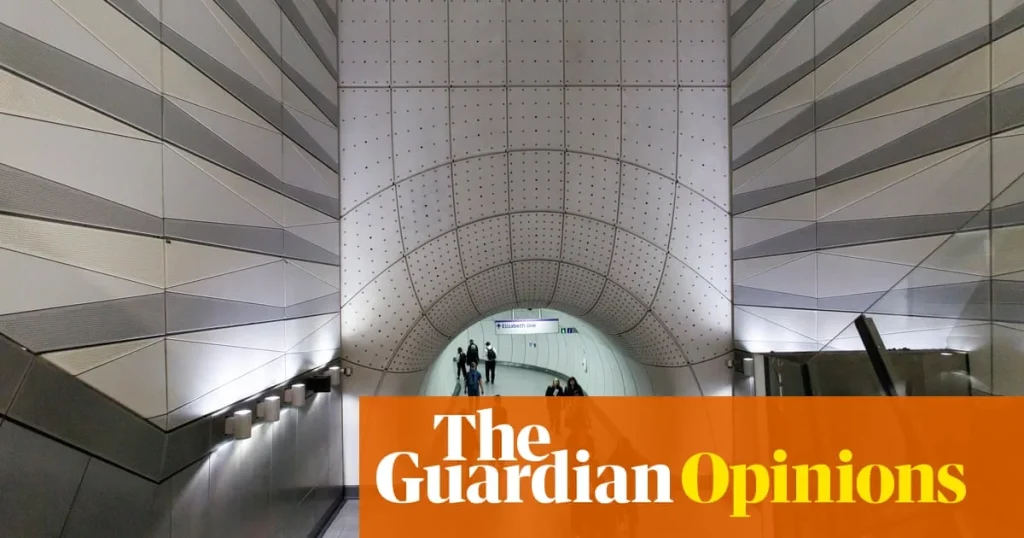
When London’s new 73-mile Elizabeth line won the prestigious Stirling prize for architecture last week, the judges’ choice proved a popular one. Spacious, fast and pleasing on the eye, the east-west addition to the capital’s underground network is a triumphant example of modern civic infrastructure. As this newspaper’s architecture and design critic put it, here was proof positive that “Britain is still capable of pulling off gargantuan transport infrastructure projects with style and panache”.
Sadly, beyond the south-east – and particularly in the north – such feelgood moments have been notable by their absence. Ten years after George Osborne’s northern powerhouse agenda promised upgraded rail links across the north of England, travellers in Liverpool, Manchester and Leeds are still waiting on the platform for that new era to arrive. During that time, spending per capita on transport in London has been more than double that in the north. A dizzying series of Westminster policy delays, cancellations and U-turns have cumulatively undermined investor confidence and passenger morale from Liverpool to Leeds.
The net result is the dispiriting shambles that has been inherited by the new Labour transport secretary, Louise Haigh. The cancellation of HS2’s northern leg from Birmingham to Manchester threatens to leave an overburdened west coast mainline close to collapse, with knock-on effects for the M6. Plans for Northern Powerhouse Rail (NPR), originally conceived as a high-speed east-west equivalent of London’s Crossrail, have been downgraded and truncated, and remain shrouded in uncertainty.
The same goes for a new transport deal for Bradford, which has the worst connections of any major city in Britain. A decade of high-flown modernising rhetoric has made headlines, but left the north’s Victorian and now dysfunctional transport infrastructure largely unaltered.
Following representations from Labour’s northern metro mayors, Ms Haigh is reportedly exploring the possibility of a cheaper and slower alternative to the abandoned northern leg of HS2. That would be far better than nothing. But if Labour is serious in its ambitions to unlock growth in all parts of the country, it must find the boldness and imagination to do things differently.
In his Labour-commissioned review of rail and urban transport, the head of Great British Energy, Juergen Maier, cited Germany’s Ruhr region as an example of better transport links driving greater productivity in the post-industrial era. The same would apply to England’s northern conurbations, but Treasury short-termism has repeatedly stymied the kind of transformative investment so desperately needed. The latest arm-wrestle over cash concerns a proposed £17bn high-speed link between Liverpool and Manchester. Ominously, the chancellor, Rachel Reeves, has placed this project alongside other unfunded commitments by Rishi Sunak’s outgoing administration.
The Elizabeth line carried a price tag of £19bn. It has been estimated that it may add £42bn to the UK economy, and it is driving regeneration along the length of its route. The socioeconomic impact of similar investment and ambition in the north, following the decades of neglect, could be even more dramatic. Last week’s award of the Stirling prize shone a light on the multiple and long-term benefits of investing big in public transport. It is time that lesson was finally learned and applied outside the capital.
Do you have an opinion on the issues raised in this article? If you would like to submit a response of up to 300 words by email to be considered for publication in our letters section, please click here.
Public transport
The points below explain how Public transport works in everyday situations and where most people get stuck.
What should beginners know about Public transport?
Start with the basics covered above, apply one change at a time, and note what happens. That way you can tell which step actually made the difference instead of guessing.
How long does Public transport take to show results?
It depends on your starting point. Most readers see a clear difference after four to six weeks of consistent work, and sooner when they track results weekly.
Anyone weighing Public transport should compare at least two realistic options before deciding. In practice, Public transport works best when the basics are handled before anything else. A quick note on Public transport: the follow-up matters as much as the first decision.




Related reading
What to check before you start
Before committing time or money to Public transport, it helps to know what a good outcome looks like. Write down the result you actually need, the budget you can live with, and the deadline you are working against. Those three answers rule out most of the options that look attractive but do not fit your situation.
Next, look at the details that are easy to miss: what is included, what costs extra, and what happens when something goes wrong. Ask directly about timelines and follow-up. A clear answer is usually a better sign than a low price, because Public transport is rarely a one-off purchase of attention.
A simple step-by-step approach
Start with the basics of Public transport and keep the first step small enough to finish in one sitting. Gather the information you need, compare two or three realistic options, and note the trade-offs in plain language rather than marketing terms.
Then test the decision on a small scale before you scale it up. This is the part most people skip, and it is the reason Public transport sometimes feels harder than it should. A short trial tells you more than another hour of reading, and it usually surfaces the one constraint that matters in your case.
Mistakes that cost time and money
The most common mistake with Public transport is treating the first option you find as the only option. Comparison is not busywork: differences in scope, support, and timing often matter more than the headline number.
The second mistake is ignoring the follow-up. Whatever you choose, plan how you will check that it worked. A quick review after two weeks catches problems while they are still cheap to fix, and it turns Public transport from a one-time decision into something you can improve.