‘Tough business’: NHLers on the league’s volatile coaching
Most of the difficulty around Volatile coaching comes from missing the basics, not from a lack of options.
Dallas Stars head coach Pete DeBoer took a moment to touch on his profession’s job security.
Or lack thereof.
“It’s insanity,” DeBoer said in May during the NHL playoffs after the league saw its 19th coaching change since the end of the 2022-23 season. “We coach in an age where everyone talks about the modern athlete, building relationships in order to coach them. How do you do that with that kind of turnover?
“It’s like going on a date and getting married and divorced before the appetizers show up. I don’t get it, but that’s the world we live in.”
That world has seen an astounding level of turnover that speaks to the desperation felt by organizations when things turn sour and the temperature is turned up.
“I wouldn’t want to be a head coach right now,” New York Islanders centre Bo Horvat said at the recent NHL/NHLPA player media tour in Las Vegas. “It’s tough.”
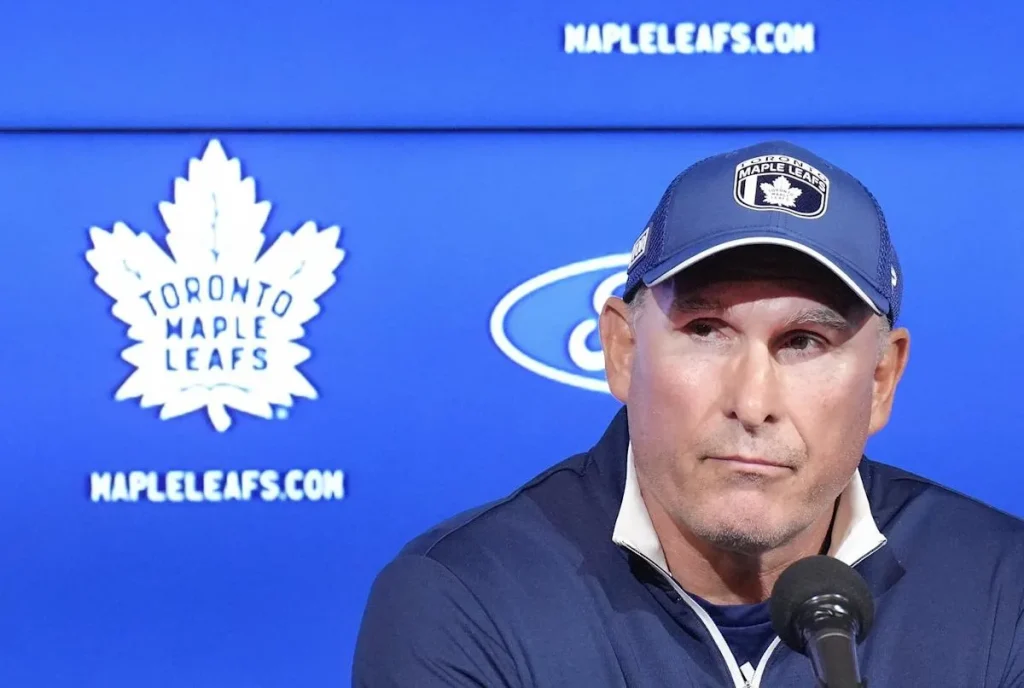
St. Louis Blues counterpart Robert Thomas saw the only pro coach he’d ever played for — Stanley Cup winner Craig Berube — get fired last December. Berube subsequently replaced Sheldon Keefe in Toronto after the Maple Leafs handed their bench boss his walking papers.
Keefe, in turn, took over for Lindy Ruff with the New Jersey Devils. Ruff, meanwhile, returned for a second stint with the Buffalo Sabres when Don Granato was canned.
“Coaching changes are hard,” Thomas said. “Sometimes it takes a little bit to adjust, but a breath of fresh air changes things in the room.”
Of the 32 coaches standing behind benches at the start of last season, 12 are no longer in the same role — including the retired Rick Bowness.
“It’s a results-driven league,” Vegas Golden Knights centre Jack Eichel said. “If you don’t win, you get replaced. If you don’t produce, you get replaced.
“If you’re not performing and not getting results, they usually just go find someone that will.”
Not all coaching moves are equal. The Columbus Blue Jackets cut ties with Mike Babcock for off-ice reasons prior to the 2023-24 campaign. Jacques Martin was brought back by the Ottawa Senators on an interim basis after D.J. Smith was axed to keep the seat warm for Travis Green. Scott Arniel, meanwhile, took over the Winnipeg Jets when Bowness hung up his clipboard.
The job, however, remains incredibly volatile.
“I don’t know what the average lifespan of the coach in a specific organization is, but I know it’s got to be short,” New York Rangers forward Vincent Trochek said. “(General managers) have to make moves if things aren’t going well.”
Florida Panthers winger Sam Reinhart watched Presidents’ Trophy-winning coach Andrew Brunette, now with the Nashville Predators, get fired after a second-round playoff exit in 2022. Paul Maurice took the reins and led the club on back-to-back runs to the Cup final, including June’s victory over the Edmonton Oilers.
“Tough business to be in,” Reinhart said. “Especially when 31 teams go home unhappy every year.”
But there are the organizations with a measure of stability.
Tampa Bay head coach Jon Cooper has the longest current tenure dating back to March 2013.
Lightning captain Victor Hedman said that continuity, even through tough times and playoff disappointments, helped his team lift the Cup twice (2020, 2021) and make three straight finals.
“It’s huge,” Hedman said. “Especially if you have a coach and a core group of players who have been with him the whole time, have bought into his message and his philosophies.”
The big defenceman added Cooper’s ability to evolve has no doubt helped his longevity.
“Really good at finding a way to play to make our team the most successful,” Hedman said. “You’re going to go through injuries, you’re going to go through different players.
“Really good at feeling out the room, feeling out the guys, and knowing when to push what buttons.”
Pittsburgh Penguins head coach Mike Sullivan, on the job since December 2015, led the franchise to Cup wins in 2016 and 2017. Jared Bednar, meanwhile, has been with the Avalanche since August 2016, and guided Colorado to the 2022 title.
“That would suck … I wouldn’t want a new coach every couple years,” Avalanche centre Nathan MacKinnon said. “There’s so many factors going into winning. Health is a big one, just the right group of guys, the right mix.”
Horvat, who experienced a coaching change in January when Patrick Roy replaced Lane Lambert, said players feel a level of guilt with a firing.
“Ultimately it’s on us and how we play,” he said. “It’s not always the coach’s fault. Sometimes you just need to change and it sparks something.”
Senators forward Shane Pinto said coaching casualties are a byproduct of a league with fine lines and small margins.
“But that’s what makes it beautiful,” he said. “That’s why it’s so rewarding when you win.”
This report by The Canadian Press was first published Oct. 6, 2024.
___
Follow @JClipperton_CP on X.
Joshua Clipperton, The Canadian Press
Volatile coaching
Use this section as a quick reference for Volatile coaching before working through the steps above.
Anyone weighing Volatile coaching should compare at least two realistic options before deciding. In practice, Volatile coaching works best when the basics are handled before anything else. A quick note on Volatile coaching: the follow-up matters as much as the first decision. If Volatile coaching feels overwhelming, start with the smallest step that produces a visible result.




Related reading
For background context, see U.S. Small Business Administration.
A simple step-by-step approach
Start with the basics of Volatile coaching and keep the first step small enough to finish in one sitting. Gather the information you need, compare two or three realistic options, and note the trade-offs in plain language rather than marketing terms.
Then test the decision on a small scale before you scale it up. This is the part most people skip, and it is the reason Volatile coaching sometimes feels harder than it should. A short trial tells you more than another hour of reading, and it usually surfaces the one constraint that matters in your case.
Mistakes that cost time and money
The most common mistake with Volatile coaching is treating the first option you find as the only option. Comparison is not busywork: differences in scope, support, and timing often matter more than the headline number.
The second mistake is ignoring the follow-up. Whatever you choose, plan how you will check that it worked. A quick review after two weeks catches problems while they are still cheap to fix, and it turns Volatile coaching from a one-time decision into something you can improve.